Difference between revisions of "Optimum Ratoons"
| (One intermediate revision by the same user not shown) | |||
| Line 6: | Line 6: | ||
===How to use this page=== | ===How to use this page=== | ||
Calculate the optimum number of ratoons by selecting the cane planting time (early, late or plough-out replant) to be used for the calculation from the drop-down list. | '''Calculate the optimum number of ratoons by selecting the cane planting time (early, late or plough-out replant) to be used for the calculation from the drop-down list.''' | ||
* '''Note:''' you can only select these options if you have a crop entry for them from the [[Cane Assumptions]] page. | |||
[[File:Optimum Ratoons - Select Plant.png|1000px|frameless|center|link=]] | [[File:Optimum Ratoons - Select Plant.png|1000px|frameless|center|link=]] | ||
The optimum number of ratoons will be shown above the table (on the left) in the light blue shaded area once the planting time has been chosen. In the below example, the optimum number of ratoons is 3 and the average annual gross margin is $1168/ha. | '''The optimum number of ratoons will be shown above the table (on the left) in the light blue shaded area once the planting time has been chosen.''' | ||
* In the below example, the optimum number of ratoons is 3 and the average annual gross margin is $1168/ha. | |||
| Line 17: | Line 22: | ||
====What about additional ratoons?==== | ====What about additional ratoons?==== | ||
The optimum ratoons table also includes additional ratoons that have not been entered (e.g. 5th to 10th ratoons) | The optimum ratoons table also includes additional ratoons that have not been entered (e.g. 5th to 10th ratoons). | ||
'''The yield and CCS values for these additional ratoons can be edited (by clicking the pencil icon) by entering estimates that reflect their particular situation.''' | |||
[[Cash Flow]] ⇐|⇒ [[Compare FPI]] | [[Cash Flow]] ⇐|⇒ [[Compare FPI]] | ||
Latest revision as of 00:00, 29 June 2023
What is this page?
This page calculates the optimum number of ratoons grown in a crop cycle that maximises profitability.
Optimum Number of Ratoons
The optimum number of ratoons is identified by the last ratoon that contributes to an increased average annual gross margin per hectare over the crop cycle. Thereafter, additional ratoons will result in a decreased average gross margin, indicating the need to replant.
How to use this page
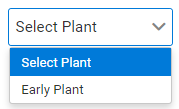
Calculate the optimum number of ratoons by selecting the cane planting time (early, late or plough-out replant) to be used for the calculation from the drop-down list.
- Note: you can only select these options if you have a crop entry for them from the Cane Assumptions page.
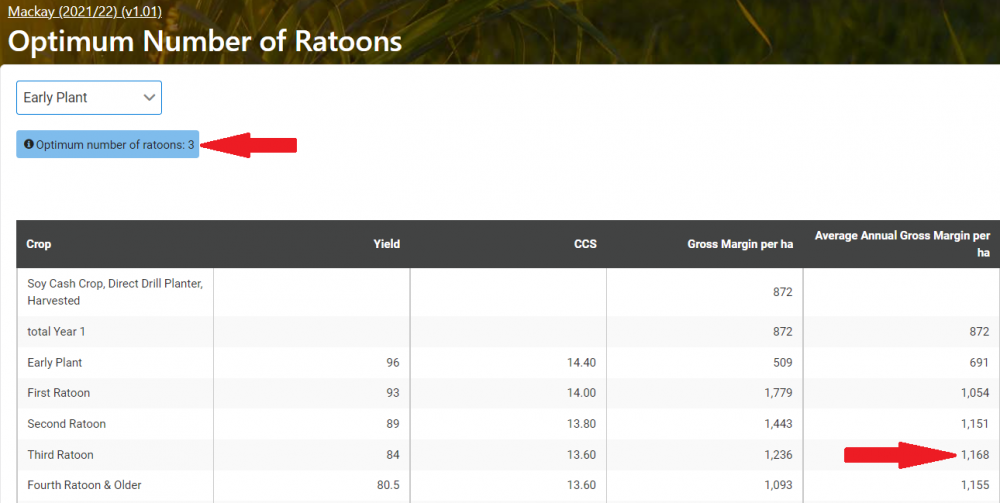
The optimum number of ratoons will be shown above the table (on the left) in the light blue shaded area once the planting time has been chosen.
- In the below example, the optimum number of ratoons is 3 and the average annual gross margin is $1168/ha.
What about additional ratoons?
The optimum ratoons table also includes additional ratoons that have not been entered (e.g. 5th to 10th ratoons).
The yield and CCS values for these additional ratoons can be edited (by clicking the pencil icon) by entering estimates that reflect their particular situation.
Cash Flow ⇐|⇒ Compare FPI